Saturday, August 6, 2011

MunaTo Festival 2010 cultural performance


Artists are from the Lemuhen Cultural Dance Troupe of Sitio Mapangal, Badtasan, Kiamba, Sarangani Province

Photo courtesy of Iner Toguin, IPDP.

Thursday, August 4, 2011

Indigenous people scholars study at MSU extension in Sarangani

By COCOY SEXCION

MALUNGON, Sarangani (August 4, 2011) – A special tertiary extension program of the provincial government for its indigenous people (IP) is now on its third year of operation and would soon have its own campus.

This was disclosed by officials during the general orientation program of 119 IP scholars attended by provincial, municipal and barangay officials with partners and parents Wednesday (August 3) at Malandag gymnasium.

“Today, I would like to welcome the people behind the fortune given to us freely, the fortune that we should value as we know that it is only through good education that we can become a better person,” said Professor Thelma Pagunsan, dean of the College of Education, Mindanao State University Gensan, in her welcome address.

Last 2009, the provincial government partnered with MSU in providing college education, particularly Bachelor of Science in Elementary Education (BSEEd), to IP students through scholarship in the Tertiary Education Extension Service, a component program of Paaral para sa Sarangan (PPSS).

PPSS is the provincial government’s scholarship program for poor but deserving Sarangan students who pursue technical, vocational or baccalaureate courses.

This extension program should not only be limited to first, second and third batches but it should be a lifetime program, Governor Migs Dominguez said in his message during the program.

He also appealed to Department of Education officials that all who will graduate in this program should automatically be hired as teachers with national item positions.

“I hope you will be the example and inspiration when you finish college so that the following batch of students will realize that poverty is not a hindrance in fulfilling your dreams,” the governor challenged the scholars.

For the first batch of 47, only 30 students remained and made it to the third year level while the second batch of 54, only 31 made it to second year level. The third batch enrolled last June is 58 with four none-IPs, based on the data provided by PPSS project coordinator Glenda Revano.

In the past two years, classes were held in the open stage and teachers’ conference room of Malandag Central Elementary School during Wednesdays. And for the lack of classrooms, Barangay Captain Delia Constantino lent the Barangay Nutrition Center as a temporary classroom for the third batch.

“I will always be your mayor and I will always apply my 10 secrets of governance which are hardwork, hardwork and more hardwork just for you,” Mayor Reynaldo Constantino said in his inspirational message.

There is already a plan in putting up a permanent campus of MSU in Malandag, he said. With the help of Congressman Manny Pacquiao and Governor Migs Dominguez, MSU campus will be established, Constantino assured. The land acquisition for the school campus will be the counterpart of the municipality for the realization of the project, he added.

“The MOA of this program is seven years. A student may finish his program in only five years. Attendance is a requirement in order to get a passing mark. Students should pass all the examinations administered by the professors of different courses,” said Professor Alicia Pulido, MSU project director.

Aside from BSEEd, MSU Gensan Chancellor Abdurrahman Canacan bared that MSU will also soon be offering Bachelor of Science in Agriculture for its extension school in Malandag.

Board Member Abdulracman Pangolima, Governor Dominguez, Board Member Virgilio Clark Tobias, Board Member Eleanor Saguiguit and Board Member Hermie Galzote turned over seven brand new computer sets to the MSU officials in support of the special tertiary extension program for IPs of the province. (Cocoy Sexcion/SARANGANI INFORMATION OFFICE)

Wednesday, August 3, 2011

IP scholars


MALUNGON, Sarangani (August 3, 2011) - Blaan and Tagakaolo scholars usher in guests during the general orientation program for indigenous people (IP) scholars as Mindanao State University (MSU) requires all students to undergo an orientation to inform students about the school’s rules and regulations, grading system and also as a venue to foster camaraderie among scholars, school personnel and partners Wednesday, August 3, at Malandag gymnasium. The MSU College of Education Malandag extension program, a special tertiary program of the province for the IP, is already on its third year with a total of 119 Bachelor of Science in Elementary Education students holding classes at Malandag Central Elementary School every Wednesday, Saturday and Sunday. (Cocoy Sexcion/SARANGANI INFORMATION OFFICE)

Governor’s challenge


MALUNGON, Sarangani (August 3, 2011) - Indigenous people scholars at the Mindanao State University extension program in Malandag are challenged by Gov. Migs Dominguez to be the example and inspiration when they finish college so that the following batch of students will realize that poverty is not a hindrance in fulfilling their dreams. The governor attended the orientation program of indigenous people scholars of MSU Malandag extension Wednesday, August 3, at Malandag gymnasium. (Cocoy Sexcion/SARANGANI INFORMATION OFFICE)

Inspirational message


MALUNGON, Sarangani (August 3, 2011) - Mayor Reynaldo Constantino assures parents, teachers and students that the dream of establishing a Mindanao State University campus in Malungon will soon be realized. The mayor shared his inspirational message during the orientation program of indigenous people (IP) scholars of MSU Malandag extension Wednesday, August 3, at Malandag gymnasium. For now, students of this special tertiary extension program of the province for IPs are holding classes at the open stage and teachers’ conference room of Malandag Central Elementary School and in the barangay nutrition center. (Cocoy Sexcion/SARANGANI INFORMATION OFFICE)

Governor’s arrival


MALUNGON, Sarangani (August 3, 2011) - Governor Migs Dominguez is welcomed by Mindanao State University professors upon his arrival to grace the MSU Malandag extension orientation of indigenous people (IP) scholars and to turn over seven brand new computer sets in support of the special tertiary extension program for IPs of the province Wednesday, August 3, at Malandag gymnasium. (Cocoy Sexcion/SARANGANI INFORMATION OFFICE)

Message of the Chancellor


MALUNGON, Sarangani (August 3, 2011) - Aside from Bachelor of Science in Elementary Education, MSU Gensan Chancellor Abdurrahman Canacan announces that MSU will also soon be offering Bachelor of Science in Agriculture in his message of support during the orientation program of indigenous people scholars of Mindanao State University (MSU) Malandag extension Wednesday, August 3, at Malandag gymnasium. (Cocoy Sexcion/SARANGANI INFORMATION OFFICE)

Computer sets for MSU extension in Sarangani


MALUNGON, Sarangani (August 3, 2011) – (L-R) Board Member Abdulracman Pangolima, Governor Migs Dominguez, Board Member Virgilio Clark Tobias, Board Member Eleanor Saguiguit and Board Member Hermie Galzote turn over computer sets to Atty. Abdurrahman Canacan, Mindanao State University Gensan chancellor; Dr. Mary Lynn Abiera, vice chancellor; Prof. Thelma Pagunsan, dean of College of Education and Prof. Alicia Pullido, MSU project director; Wednesday, August 3, at the Malandag gym during the MSU Malandag extension indigenous people scholars general orientation. (Cocoy Sexcion/SARANGANI INFORMATION OFFICE)

Asia Philippines 21 Top Ten Leaders Awardee


ALABEL, Sarangani (July 19, 2011) - Sarangani schools division superintendent Dr. Allan Farnazo congratulates QUEST (Quality Education for Sarangani Today) program manager Annalie Edday for being an awardee of the Asia Philippines 21 ten outstanding young leaders. The announcement was made during the turnover of Books for Asia from Asia Foundation Tuesday, July 19, at the Capitol gym. Edday along with the top ten awardees will be the official delegation of the Philippines to the international young leaders summit in New Delhi, India in November this year. (Cocoy Sexcion/SARANGANI INFORMATION OFFICE)

Tuesday, August 2, 2011

Sarangani delegates for Peace Exhibit 2009


Peace Exhibit 2009
School of Designs and Arts, College of St Benilde
La Salle University, Manila

Peace Exhibit 2009


Peace Exhibit 2009
School of Designs and Arts, College of St Benilde
La Salle University, Manila

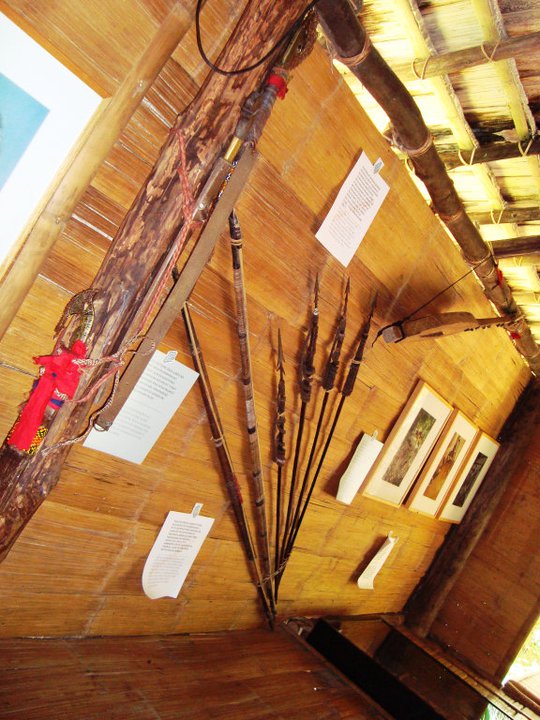
Lamlifew Village Museum


Lamlifew Village Museum
Sitio Lamlifew, Datal Tampal, Malungon, Sarangani Province

Tahakayo Blaan Day Care Project


Tahakayo Blaan Day Care Project
Sitio Tahakayo, Amsipit, Maasim
Funded by the World Vision Development Foundation Inc
in partnership with Mahintana Foundation and Indigenous Peoples Development Program (IPDP) together with MSWDO Maasim.

Tboli basketry training in Falel, Tamadang, Kiam


Thursday, July 28, 2011

Program director


MALUNGON, Sarangani (June 24, 2010) - Beth Farnazo, Indigenous
People’s Development Program (IPDP) director, distributes bags to
Blaan school children at Lamlifew Elementary School as one of the
beneficiaries of adopt-a-child program of the IPDP in partnership with
Smart Communications Wednesday, June 23. (Cocoy Sexcion/SARANGANI
INFORMATION OFFICE)

School children


MALUNGON, Sarangani (June 24, 2010) - Kids with IPDP staff pose for a
souvenir shot after the distribution of school supplies and school
bags under the adopt-a-child program of the Indigenous People’s
Development Program of the Provincial Governor’s Office in partnership
with Smart Communications Wednesday, June 23, at the community living
museum in Sitio Lamlifew. (Cocoy Sexcion/SARANGANI INFORMATION OFFICE)

New school bag


MALUNGON, Sarangani (June 24, 2010) - A Blaan lass takes home a new
school bag loaded with school supplies under the adopt-a-child program
of Indigenous People’s Development Program of the Provincial
Governor’s Office in partnership with Smart Communications Wednesday,
June 23, at the community living museum in Sitio Lamlifew. (Cocoy
Sexcion/SARANGANI INFORMATION OFFICE)

Wednesday, July 27, 2011

Hinterland community opens new high school

By COCOY SEXCION

MAASIM, Sarangani (July 7, 2011) - Governor Migs Dominguez immediately approved a barangay resolution he received on Tuesday (July 5) requesting for the construction of a students’ dormitory at a new integrated high school in a hinterland community.

The approved request of barangay Amsipit for fund allocation of P400,000 for a dormitory was matched by the governor with a commitment of additional provincial school board teachers through QUEST (Quality Education for Sarangani Today).

The dormitory in sitio Kyumad would accommodate students living in distant sitios. Students usually walk for hours daily in going to school. With the dormitory, the students would be able to live near the school.

Local officials joined Governor Dominguez with Department of Education assistant division superintendent Socrates Mabalot and DSWD XII assistant regional director Gemma Rivera during the inauguration and turn-over to the community of a two-classroom school building at Kyumad Integrated School.

The P1.242-million community-led project was completed with a KALAHI-CIDSS (Kapit-bisig Laban sa Kahirapan-Comprehensive and Integrated Delivery of Social Services) grant amounting to P935,000, plus a counterpart of P163,042 from the provincial and municipal government. Sarangani Energy Corporation shouldered the P165,000 barangay counterpart while DOLE Philippines lent a welding machine.

“Before, our school had to combine Grade 1 to Grade 4 pupils in one classroom. And when some of our Grade 4 pupils would transfer school in the lowland, they would be sent back to Grade 1. Why? That’s because of poor quality of education here in the highland,” Pastor Arthur Moyak said in his testimony. “That’s why I thank the leaders specially Governor Dominguez for looking after our problems.”

Sitio Kyumad, inhabited mostly by Blaan families, is located in the hinterlands of Maasim with 720 households and a total of 80 1st year and 2nd year students who are now studying at the new integrated high school.

The governor lauded the barangay council and the entire community for the “best practices” in the implementation of the project.

“You inspired me today. Kaning inspirasyon na inyong gihatag sa akoa, mao ni ang dalhon nako pagbalik nako sa Kapitolyo,” Governor Dominguez told the residents. “Nangutana gani ko, kinsa man ang kontraktor diri? Tinuod lang mas nindot pa man mo ug agi kaysa naay engineer”.

The governor added: “Imbes mag pusta ta sa last two, ipusta na lang nato sa kaugmaon sa atong mga anak. Ang target nako, pagbalik nako diri sa pag edad nako ug 50 years old naa nay sobra gatos ka professionals na naggikan diri sa inyong lugar. Dili lang nako ni damgo kun dili damgo natong tanan”.

KALAHI-CIDSS is the national government’s flagship poverty–alleviation project through the financial support of the World Bank.

KALAHI-CIDSS projects follow the Community-Driven Development (CCD) model designed to mobilize the capacity of the local people to analyze their own need, manage resources, and implement appropriate interventions.

These are projects that involve the community right from the start, encourage transparency and thus prevent corruption.

CCD employs strategies that development priorities are addressed in a participatory, collective and inclusive decision-making. In KALAHI-CIDSS, control over resources is in the hands of the poor. (Cocoy Sexcion/SARANGANI INFORMATION OFFICE)

Blaan school pilots mother tongue-based education

MALUNGON, Sarangani (February 4, 2011) – Local officials, education and language experts led the launching of Lamlifew Elementary School as pilot mother tongue- based multi-lingual education (MTB-MLE) of the province Friday (February 4).

Lamlifew is a Blaan village at the town’s outskirts. Blaan is the name of the people and the language of the largest indigenous group in Sarangani that finally sought indigenized curriculum from the Department of Education.

“Basically, MTB-MLE is integrating the indigenous culture in the regular education curriculum using the first language (Blaan),” DepEd- Sarangani division language coordinator Elizabeth Torres said.

As an example, Torres said teachers can teach the English alphabet in Blaan accent and intonation and then do it in English as an international language.


“MTB-MLE also includes teaching traditional practices that have cultural significance to them.”

Part of the indigenized curriculum through MTB-MLE is the integration of Blaan’s Tabih (traditional clothing), dances and songs to the pupils.

“Sarangani has three variations of the Blaan language from the three municipalities of Glan, Malapatan and Malungon. We will also come up with a phrase book and try to investigate their differences,” Torres added.

Lamlifew has a women’s association aimed at the preservation and development of their cultural heritage and traditional handicrafts.

Lamlifew as a complete elementary started in 1997 with teachers come and go because of their inadequacy in number and their willingness to be assigned to far-flung areas.

The school was built in 1982, then a primary school, through the effort of tribal leader Kalingo Maluma who brought the proposal to Malacanang by himself. Loida Esperanza became the first school head of the school in 1997.

Malungon West District supervisor Nora Nerpiol said the education department has been supporting the school since then through physical and academic means. Lamlifew has the most number of professionals in Barangay Datal Tampal.

Board member Eleanor Saguiguit said the Growth with Equity in Mindanao- (GEM) is on its way for the construction of a footbridge along Bluan river in front of the school where 98 percent of the pupils are crossing everyday to get to school.

“We will also look for partners for the community to fund their traditional craftsmanship like basket-making and beads making,” Saguiguit said.

Saguiguit recalled the village, roughly 1,600 hectares of pasture land, was given to her as a dowry by her uncle-in- law when she got married in 1977. She afforded to refuse ownership of the land after seeing the presence of the community there, she said.

In 2007, the province’s Indigenous People’s Development Program (IPDP) helped Lamlifew build a living museum and identified Lamlifew Elementary School as a School of Living Tradition (SLT).

Rosie Alcantara Dominguez, mother of Governor Migs Dominguez, sponsored the technology transfer of silk weaving by Malaysian expert weavers to the Lamlifew Women’s Association.

In 2009, Beth Ditan, a master in the art of beads making from the community, taught Grades V and VI pupils the traditional craftsmanship. Japanese anthropologist Taku Kawamuta later funded the materials for beads making and traditional clothing after seeing the children in the internet.

With the MTB-MLE, the school will have a once-a- week IP day with community elders to teach the children songs, dances and handicrafts. (Russtum G. Pelima/SARANGANI INFORMATION OFFICE)

Better future for the IPs


ALABEL, Sarangani (October 30, 2010) – Governor Migs Dominguez gives an inspirational message to tribal elders and participants by providing the younger generation the opportunity to finish their education and become professionals during the indigenous peoples thanksgiving day Friday, October 29, at the provincial gym. (Cocoy Sexcion/SARANGANI INFORMATION OFFICE)

Damsu


ALABEL, Sarangani (October 30, 2010) – Blaan cultural master Monti Yangon leads the tribal prayer “Damsu” at the opening ceremony of the indigenous peoples thanksgiving day and turn-over of chieftainship Friday, October 29, at the provincial gym. (Cocoy Sexcion/SARANGANI INFORMATION OFFICE)

Lemuhen Performing Arts


ALABEL, Sarangani (October 30, 2010) – Lemuhen Performing Arts Group dancers from Kiamba town perform at the indigenous peoples thanksgiving day Friday, October 29, at the provincial gym. This Tboli performing arts group is recipient of the School of Living Tradition, a project by the Indigenous Peoples Development Program under the governor’s office. (Cocoy Sexcion/SARANGANI INFORMATION OFFICE)

Message of commitment


ALABEL, Sarangani (October 30, 2010) – Vice Governor Steve Chiongbian Solon gives his message of commitment to the Provincial Tribal Council of Sarangani during the celebration of the National Indigenous Peoples Thanksgiving Day at capitol gym Friday, October 29. The celebration was participated in by the major tribes of the province such as Blaan, Tboli, Tagakaolo and Manobo from the seven municipalities. (SARANGANI INFORMATION OFFICE/Bon-Bon Quiño)

Monkey dance


ALABEL, Sarangani (October 30, 2010) – A member from Lemuhen Performing Arts Group performs a monkey dance at the indigenous peoples thanksgiving day and turn-over of chieftainship Friday, October 29, at the provincial gym. (Cocoy Sexcion/SARANGANI INFORMATION OFFICE)

NCIP Regional Director


ALABEL, Sarangani (October 30, 2010) – Governor Migs Dominguez receives a certificate of appreciation from National Commission on Indigenous People regional director Jean Anne Moendeg Zoilo for integrating the tribal communities in the pursuit for progress and human resource development through education. (Cocoy Sexcion/SARANGANI INFORMATION OFFICE)

Tribal women


ALABEL, Sarangani (October 30, 2010) – Vice Governor Steve Chiongbian Solon greets the tribal women from Alabel at Capitol gym Friday, October 29, in celebration of the National Indigenous Peoples Thanksgiving Day. This celebration marks a significant milestone in the history of Indigenous People in upholding their rights to ancestral domain, social justice and human rights, self governance and empowerment and rights to cultural integrity. (SARANGANI INFORMATION OFFICE/Bon-Bon Quiño)

Assistance to MTB-MLE


MALUNGON, Sarangani (February 4, 2011) – Board member Eleanor Saguiguit urges the community to protect and preserve the cultural heritage of the indigenous Blaan particularly in Lamlifew and swears to seek more assistance for them. Local officials, education and language experts led the launching of Lamlifew Elementary School as pilot mother tongue- based multi-lingual education (MTB-MLE) of the province Friday (February 4). (Cocoy Sexcion/SARANGANI INFORMATION OFFICE)

Blaan School


MALUNGON, Sarangani (February 4, 2011) – Pupils get ready to welcome visitors at the school entrance with a bamboo-made man bridge. Local officials, education and language experts led the launching of Lamlifew Elementary School as pilot mother tongue- based multi-lingual education (MTB-MLE) of the province Friday (February 4). (Cocoy Sexcion/SARANGANI INFORMATION OFFICE)


Lamlifew pupils


MALUNGON, Sarangani (February 4, 2011) – In their traditional dress, pupils of Lamlifew Elementary School sing the national anthem in an open stage landscaped with white stones from the Bluan river in front of the school. Local officials, education and language experts led the launching of Lamlifew Elementary School as pilot mother tongue- based multi-lingual education (MTB-MLE) of the province Friday (February 4). (Cocoy Sexcion/SARANGANI INFORMATION OFFICE)

Lawin dance


MALUNGON, Sarangani (February 4, 2011) – Pupils of the Lamlifew Elementary School perform the ral kafi (lawin dance) to entertain their visitors. Local officials, education and language experts led the launching of Lamlifew Elementary School as pilot mother tongue- based multi-lingual education (MTB-MLE) of the province Friday (February 4). (Cocoy Sexcion/SARANGANI INFORMATION OFFICE)


Mother tongue- based multi-lingual education


MALUNGON, Sarangani (February 4, 2011) – Department of Education division language coordinator of Sarangani Elizabeth Torres expounds the nature and importance of mother tongue- based multi-lingual education (MTB-MLE) in the learning processes of children. Local officials, education and language experts led the launching of Lamlifew Elementary School as pilot MTB-MLE of the province Friday (February 4). (Cocoy Sexcion/SARANGANI INFORMATION OFFICE)

My Sarangani hymn


MALUNGON, Sarangani (February 4, 2011) – Pupils of Lamlifew Elementary School sing an original composition of Blaan elder Herminia Lakna called E E Sarangani, (My Sarangani) in the Blaan dialect. Local officials, education and language experts led the launching of Lamlifew Elementary School as pilot mother tongue- based multi-lingual education (MTB-MLE) of the province Friday (February 4). (Cocoy Sexcion/SARANGANI INFORMATION OFFICE)

Welcome dance


MALUNGON, Sarangani (February 4, 2011) – Ye or Blaan mothers perform a welcome dance as visitors and guests arrive at the village. Local officials, education and language experts led the launching of Lamlifew Elementary School as pilot mother tongue- based multi-lingual education (MTB-MLE) of the province Friday (February 4). (Cocoy Sexcion/SARANGANI INFORMATION OFFICE)

Rosalito Labi, a leader of his tribe

MAITUM, Sarangani (October 21, 2010) - Rosalito Labi’s parents were born in Angko village. In the late 60’s, his family moved to barangay Baningo, now barangay Ned of Lake Sebu, South Cotabato.

In Ned, he became a Tboli chieftain and supervisor of the Alternative Learning Center. In 2005, Labi, now with a family of his own, returned to his roots in sitio Angko.

In sitio Angko, he found the houses of his relatives far from each other. He encouraged them to transfer their houses near to each other so that they will be recognized as a sitio. Soon after, the two original houses mushroomed into 30, thus sitio Angko was born.

There is no sign of progress in this sitio – no electricity, no potable water, help from the government is nil because of the distance and the difficulty in going there.

Mulling over their pitiful situation, Labi, a father of 9 children, called for a meeting with his tribe and told them, “Nothing will happen to us if we just resign to our fate. We must think of positive things that could possibly change our destiny. Your problem is my problem too. The problem of your children is the problem of my children too. Why can we not unite and plan for our future?” Labi told them. They all agreed.

In that meeting, Labi asked the villagers their concerns and identify the most urgent ones. The villagers unanimously agreed that they need to build a trail that would connect them to the dirt road. If they built a trail, there is a big chance for them to bring down their crops for selling in the town.

On May 27, 2006, they started building a trail. They used “buyo-buyo” or sharpened wood. They did this during Saturdays and Sundays. Labi tearfully recalled how they worked even with empty stomach as long as they can build the trail. Every able-bodied villager contributed to the construction of the trail. Each was given equal portion of the trail to work on. “We proved to ourselves that walang imposible kung magkaisa kami,” Labi said.

In 2007, with prodding from the residents in sitio Angko, he ran as barangay kagawad for Bati-an and handily won.

He continued leading his people. With the “bayanihan spirit” as their best weapon, they built a waiting shed beside the dirt road so that when it rains, their farm produce will not get wet while waiting for a motorcycle to bring them to town. Later on the waiting shed became a resting place for travelers from Tuanadatu and Ned.

To boost their farm production, Labi led the construction of a nursery makeshift building where they propagated coffee, banana, and other seedlings which were later on distributed to the residents. This helped increase their income.

Labi was also concerned about the future of the children. So he requested his married daughter, a high school graduate, to teach children how to read and write. A vacant space in their house was used as classroom to more than 30 daycare children. But if there are visitors, the children would look for somewhere else where they could continue their learning.

“I bought a blackboard from my honorarium as barangay kagawad, Labi said. I gave half of my honorarium to my married daughter as her honorarium too for teaching the children.” Labi believes that “yung galing sa tao dapat ibalik sa tao.” So he spends most of his honorarium for the villagers. The local government gave paper pads, pencils, and other school supplies, while the Indigenous Peoples Development Program of the provincial government gave teaching materials. Now, it is the local government which pays the honorarium of the volunteer teacher.

“The International Aid (IA) came to sitio Angko. We were told to build a Health and Nutrition Post or HNP. Again, we built an HNP through “bayanihan”. IA gave two weighing scales and BP apparatus for the HNP. We were promised medicines worth P25,000 and we are hoping the medicines would come soon,” Labi said.

Their struggle is far from over. There are still a lot of things to be done. But Labi, an elementary graduate, believes that if they unite, nothing is impossible and that his sitio will rise above poverty.

Today, Labi can look back with nary a trace of bitterness but pride. (Beth Ramos-Palma Gil/MAITUM INFORMATION OFFICE)

FEATURE - A people that refuses to die

By Beth Ramos-Palma Gil

MAITUM, Sarangani (October 21, 2010) - “For a time, we thought our fate is sealed with hopelessness,” says Rosalito Labi, a sitio leader and barangay kagawad (village councilor) of sitio Angko, the sitio where we decided to spend our weekend.

This sense of hopelessness emanated from their past experiences. Government aid came few and far between if not none at all.


Sitio Angko is 15 kilometers away from the town proper and can be reached through a dirt road. From the dirt road, one has to walk three to four hours through a three-kilometer narrow trail. If it rains, the narrow trail with uphill and downhill climb becomes a one-foot deep mud ditch which makes walking extremely difficult. But the rich foliage and breathtaking view of the magical forest more than makes up the arduous journey.

This narrow trail was made through “bayanihan” by the villagers on May 2006 and was completed seven months later. They used “buyo-buyo” or sharpened wood to make the trail. Despite the trail they built, villagers still have a hard time transporting their farm produce to the poblacion. They use carabaos and horses to transport their farm produce.


Upon our arrival, we were forced to stay indoors by inclement weather. We took this opportunity to get close with the villagers, telling stories, playing with the kids, while others contented themselves looking at the foggy surroundings.


Securely ensconced on a rolling hill surrounded by rain forest, sitio Angko is home to 120 smiling, gentle, and peaceful Tboli people, who live on the edge of poverty. But villagers can proudly say that they have a zero crime rate. Their main source of livelihood is farming and hunting. Their main crop is corn. Fresh water fish is still abundant in the creeks of sitio Angko.


Angko is the farthest sitio of barangay Batian. It is also the least explored of all the six sitios of Bati-an.


Bati-an (population: 949) is the province’s poorest village according to the Community Based Monitoring System. 99.8% of its households have income below the poverty threshold and below the food threshold. 62.1% of its households have no access to potable water.


In basic education, 94.3% of Bati-an’s children 13-16 years old are not attending high school; 44.3 of children 6-12 years old are not attending elementary school; and 48.2% aged 6-16 years old are not attending school.


Labi confessed there were instances when they stopped dreaming and hoping for a bright future. “The barangay captain never visited us,” he said. Intervention from the government was hard to come by because of its distance and the difficulty in reaching the place.


Until February 2008 when the Mindanao Rural Development Program (MRDP), through the initiative of the provincial and municipal governments, started its projects in this sitio. Through their newly-formed people’s organization, the Tboli Farmers’ Association, MRDP projects were implemented but not after they were given skills training to prepare them for the projects. Rolando Delcano, an employee from the municipal agriculturist office, and the designated municipal facilitator of MRDP projects, patiently and conscientiously attended to the implementation of the projects. He goes to the area twice a month, live, sleep, and eat with them. Villagers sincerely involve themselves in the projects and in the process found themselves empowered.


“At first, people here were aloof. They just stay silent and stare at visitors. But now, they have learned to interact with other people. They learned to smile and talk to us,” says Delcano. “They also earned confidence and sense of pride from what they did for their sitio. Before, people here plant so that they have something to eat, but now, they also plant so they have something to sell,” Delcano disclosed.


The organization was given four carabaos, three horses which became five, and 12 goats which became 20. The carabaos and horses are used to transport their farm produce from the sitio to the dirt road where motorcycles will bring them to the town proper. Ten percent of the earnings in transporting goods go to the association.


Aside from the animals, MRDP also provided them with planting materials for abaca and coffee. Two hectares were planted to coffee, while 10 hectares were planted to abaca.

The coffee is about to bear fruit while they are now starting to harvest the abaca.


Representatives from the International Aid (IA) also visited them. They were promised a P25,000 worth of medicines once they built a health and nutrition post (HNP) which they did through bayanihan and from indigenous materials in the area. The HNP has been built and hopefully the P25,000 promised by the IA would come soon.


In May 2009, a solar power system was given to them by the provincial government. For the first time, villagers saw electric light on a pitch-dark night.


As the night falls in sitio Angko, myriad of fireflies light the growing darkness. The subtle beauty of wilderness at night and the chilling cold that it brings, makes sleep easy to come by. What a great break from a humdrum, busy life in the urban area.


“The biggest success of these people is their empowerment,” Delcano added.


Sitio Angko has the largest land area in Bati-an’s forestland which is 30% of the total area. Villagers are aware of the effects of “kaingin” (slash-and burn farming), illegal fishing (in the river), or illegal cutting of trees that is why these activities are discouraged in order to preserve the healthy environment. Near the proposed water spring development (funding of which is still to be sourced out), we found more or less 20 “red lawaan” trees which trunks are as big as the size of a fuel container drum.


A makeshift daycare center was built by the villagers through the help of the local government by providing materials. The honorarium of the volunteer/teacher is shouldered by the local government also. Labi said “we would be happy if the government or any funding agency or NGO help us build a permanent daycare center.”


Some of the big challenges that the villagers have to face are lack of medicines, basic education, lack of farming techniques and seedlings, and of course improvement of the narrow trail which connects them to the main dirt road.


But their most urgent concern is health and sanitation. The lack of potable water aggravates their situation. Toilet bowls given to them by the local government have to wait until a communal system will be constructed which would take a long time to be realized. More often, children are the ones who suffer from diarrhea and other water-borne diseases because of unclean drinking water. The existing water source which is a kilometer away from the center of the sitio is open and susceptible to contamination.


Sitio Angko is a strategic starting point to the many potential tourist spots in Bati-an. There is the hundred caves. Villagers told us that a cave was used to be a stronghold of the Japanese Imperial Army. Another cave, the El Kiblat Cave, just three kilometers away, has many compartments and with an upward exit. The giant staircase with flowing water, is just a kilometer away. The Dakiol Falls, five kilometers away, has a three-tier drop 50-meters each long. Its sight and sound leaves one catching his or her breath because of the heavy fall of water to the ground. Anybody who visited this place said that it is a perfect place for trekking and mountain climbing.


Villagers in sitio Angko provide a compelling testimony of a people that refuse to give up despite the odds. Labi admitted that in the past, there were times they lose hope and just accept the harsh reality; that nothing can be done to improve their situation. But like their ancestors who took care of this place for their future, they refused to give up and converted crisis as opportunities. They turned their small dreams to a reality. “Na-feel na namo ang presence sa gobyerno,” he said.


We went home refreshed and inspired by an empowered people who refuse to give up. (Beth Ramos-Palma Gil/MAITUM INFORMATION OFFICE)


Village teacher


MAITUM, Sarangani (October 21, 2010) - Jabela Reyes, daycare teacher, patiently teaches sitio Angko children how to read. She started as a volunteer. Later, Rosalito Labi, a barangay kagawad, shared his honorarium with her. Now, it is the local government that pays her honorarium. (Beth Ramos-Palma Gil/MAITUM INFORMATION OFFICE)

Day care pupils


MAITUM, Sarangani (October 21, 2010) - More or less 40 children go to the makeshift daycare center of sitio Angko in barangay Bati-an daily. Bati-an (population: 949) is the province’s poorest village with 99.8% of its households having income below the poverty threshold and below the food threshold. 62.1% of its households have no access to potable water. In basic education, 94.3% of Bati-an’s children 13-16 years old are not attending high school; 44.3 of children 6-12 years old are not attending elementary school; and 48.2% aged 6-16 years old are not attending school. (Beth Ramos-Palma Gil/MAITUM INFORMATION OFFICE)

Thursday, December 10, 2009

Traditional Tboli feast


KIAMBA, Sarangani (December 10, 2009) – A traditional feast of delectable native dishes is offered inside the newly built Tboli house at Falel community in barangay Tamadang, consecrated during the feast of Immaculate Concepcion Wednesday, December 9.(KIAMBA NEWS CENTER/Allan de Lima)

Kehelubong Lemlunay: A feast of exotic culture

KIAMBA, Sarangani (December 10, 2009) – Seven kilometers of uphill motorcycle ride from Kiamba proper awaits an unveiled paradise of a mountainous village in barangay Tamadang.

Sitio Falel is endowed with rich traditions and well-preserved culture that have long been kept by one of Sarangani’s indigenous tribes – the Tboli.

It is a community now groomed by the local government as an integral part of the town’s eco-tourism showcase.

“It is one of our beautiful tourist spots here that if you happen to miss, you missed half of your life,” Mayor Rom Falgui quips.

On December 18-20, the Tbolis at Falel will display various traditional practices of the tribe as they celebrate Kehelubong Lemlunay, which means a gathering in paradise, as the village commemorates its 33rd founding anniversary.

One of the feast’s highlights will be the showcasing of Tboli hut making, revealing the tribe’s time-honored way of building their houses which are primarily composed of indigenous materials such as bamboo poles and Fern tree (cabo negro).

The name “Falel” was derived from one of the species of Fern plant that is prevalent around barangay Tamadang.

Meanwhile, Cogon grass and Rattan strips are used for binding. Even without bolts and nails, Tboli houses are said to last for 15 years.

Prior to the occasion, a hut was already constructed. Through a bayanihan, the building was put up as the multi-functional hall for the community’s various ethno-cultural practices.

The Tboli villagers, who are now mostly Catholic converts, have consecrated their newly-built house during the feast of Immaculate Concepcion (December 8).

“Kasi po proud kami na Tboli tribe kami. Gusto sana namin ibalik ang sinaunang sistema ng paggawa ng traditional na Tboli house para sa eco-tourism program ng munisipyo,” said municipal tribal affairs coordinator Juanito Sampan.

“Kiamba is full of pure beauty that every nature-lover, local or foreign, will surely admire especially the picturesque view here in Falel,” said municipal tourism officer-designate Allan de Lima.

“Every tourist will surely experience the traditional means of living as the way it was during the ancient days of the Tboli community,” De Lima concluded. (KIAMBA NEWS CENTER/Joel C. Pinos)